A study in the roots of the Reformation
Martin Luther & the Quran
How strong is the connection? A study by Sadig Malki, Samuel Shropshire and Torsten Peschek.
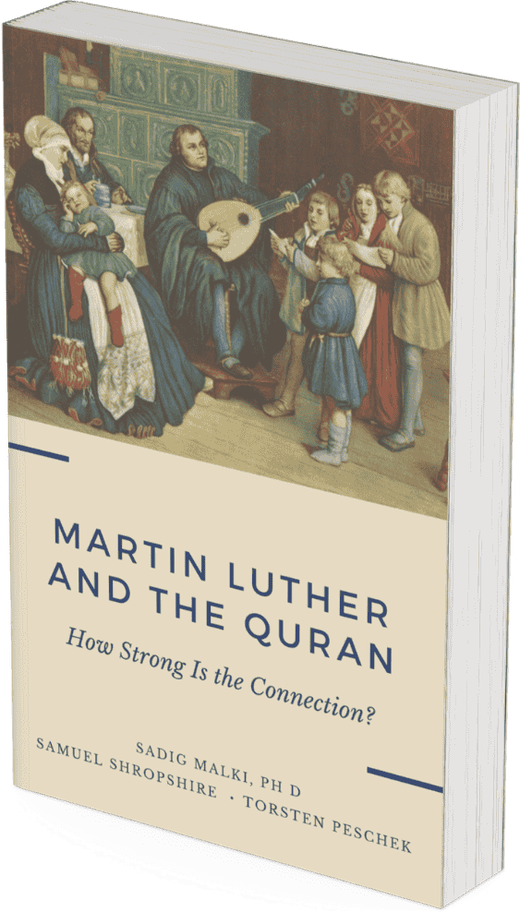
Kindle and paperback editions, 99 pages
A study in the roots of the Reformation
How strong is the connection? A study by Sadig Malki, Samuel Shropshire and Torsten Peschek.
Kindle and paperback editions, 99 pages
Based on the fact that Martin Luther (1483-1546 AD) wrote, along with Philip Melanchthon, the introduction of the Latin translation of the Quran (609-632 AD), a comparison of Luther's Reformation ideas with specific verses of the Quran was made.
It seems that Luther not only had a positive opinion of the Quran in his early mission, but he undoubtedly borrowed some of the ideas contained in the Quran in constructing his reformation agenda.
This is especially obvious with respect to the issues of the concept of God, the denunciation of celibacy, the removal of idols in churches, the position of Mary, regular daily prayers, the centrality of the Scripture, and the prohibition of usury.
Hopefully this new discovery will lead today's Christians and Muslims to ponder the common message of the Quran, which appeared more than 800 years before Luther's time. It was a source of enlightenment for Luther and others, grounded in the first commandment confirmed by Jesus in the Gospel of Mark, "Hear, O Israel, the Lord our God is One Lord", which is also the essence of the message of the Quran: "Say, He is God the One, the Eternal Absolute, vital to all…" (Quran 112).
"...the underlying theology of Islam appealed to men and women since its doctrine, unlike the Christian teaching on the incarnation and Trinity, presented no offence to reason." Francisco, Adam. Martin Luther and Islam
"Not even true Christians, nor Christ himself, not the apostles or prophets ever exhibited so great a display of religiosity… I sincerely believe that no papist, monk, cleric or their equal in faith would be able to remain in their faith if they should spend three days among the Turks." Henrich, Sarah and J. Boyce. Martin Luther—Translations of Two Prefaces on Islam
Luther suggested that the passages in the Quran he thought "...were open to Christian interpretation were implanted by the Holy Spirit." Francisco, Adam. Martin Luther and Islam
Muslims followed "…the Koran in disciplining themselves to pray regularly and that their outward conduct had inspired Christians to embrace Islam." Clark, Harry. The Publication of the Koran in Latin: A Reformation Dilemma
The question
No one doubts the importance of Martin Luther in the emergence of the Reformation. Yet in five hundred years of scholarship, almost no one has examined how the Quran, revealed more than eight centuries before Luther's time, may have shaped his revolutionary ideas about God.
Luther did not encounter Islam from a distance. He read about it, wrote about it, and fought for the right of Europeans to read the Quran for themselves. In 1996, two renowned Lutheran professors of the New Testament, James Boyce and Sarah Henrich, observed that Luther's remarkable involvement with Islam and the Muslims is insufficiently known. They translated, for the first time into English, Luther's own prefaces to The Book of Rites and Customs of the Turks and to Bibliander's edition of the Quran.
This book takes the next step. It gathers Luther's statements in one place, sets his reformation ideas beside the concepts of the Quran, and lets the reader judge the connection.
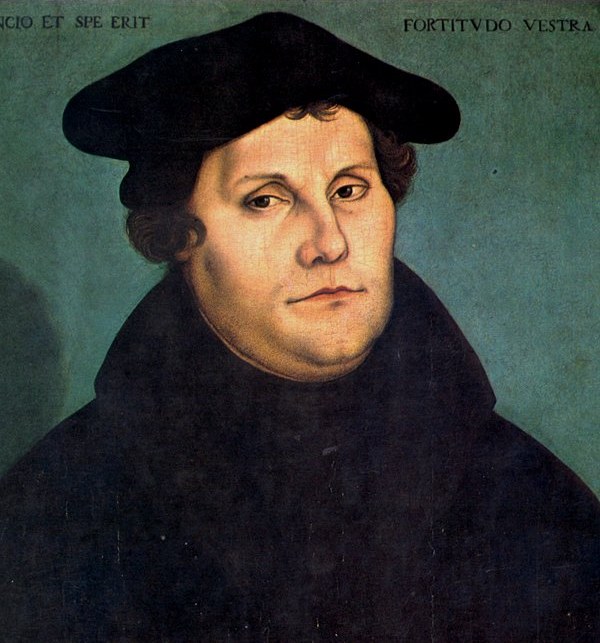
Part one of the book
Long before the Siege of Vienna in 1529 hardened attitudes across Europe, Luther wrote about Islam with striking openness. The book documents his early views in detail, including that Luther:
In his 1530 preface, Luther wrote that the religion of the Turks appeared "far more splendid in ceremonies" than the Christianity of his own day, even including its clergy and religious orders. Summarised from Luther's preface to the Tract on the Religion and Customs of the Turks, 1530
When opponents tried to stop the printing of the Latin Quran in Basel in 1542, it was Luther who argued for its publication, and the ban was lifted. His preface appeared, together with one by Philip Melanchthon, in Bibliander's 1543 edition.
Part two of the book
The heart of the book is a careful comparison scheme. Each of Luther's defining reformation ideas is placed next to the concept as the Quran explains it, revealed between 609 and 632 CE. Here are five of the parallels the book examines in depth.
Luther taught
Sola scriptura, the scripture as the sole measure of truth. Before Luther, many university masters considered this outlook heresy.
The Quran says
The Quran calls upon Jews and Christians to follow their own scriptures: "Say, O People of the Book, you have no valid ground for your beliefs unless you follow the Torah and the Gospel."
Luther taught
God is the Lord of life and death, and no structure of human intercession can alter His decision, born of His own mercy and judgement. This idea brought the medieval system of intercessory prayer down.
The Quran says
An absolute God, free from any human reductionism, stands at the very heart of the Quran's message.
Luther taught
Before an all merciful God, all believers are equal. Every Christian has direct access to God by faith alone, a major departure from Roman Catholicism.
The Quran says
God's mercy is always near for those who have faith in Him. The door of repentance stands open, direct and without any intermediary, human or otherwise.
Luther taught
Prayer as a daily connection to God that must be kept regardless of how busy the individual is, scheduled for the morning, noon and night.
The Quran says
The Quran establishes prayer at fixed times through the day and night as the believer's constant link to God.
Luther taught
Luther condemned usury and, notably, coupled trade and usury together in the very title of his article on the subject.
The Quran says
The Quran prohibits usury in the strongest terms and couples the two issues in the same way, permitting trade and forbidding usury, in verse 2:275.
These are five of many. The book also compares themes such as the Trinity, celibacy, statues in places of worship, the role of Mary, salvation and the priesthood of believers, idea by idea, with sources for every claim.
The historical record
Luther Protests
Luther was a devout Catholic monk, but in 1517 he started preaching against the selling of indulgences. He distributes his famous '95 Theses in Wittenberg.
Luther and the Quran
As early as 1520, Luther shows, from his reading of the Quran, great understanding of how the Quran influenced the "Turks'" faith and behavior. (1)
Luther confronts Roman Catholicism
Luther burns the papal decree and is excommunicated. He and his followers are condemned as "enemies of Christendom." He was sentenced to death by Emperor Charles V. (2)
Luther drives reforms
Luther returns to Wittenberg and publishes a series of influential writings on theological and social reforms (2). In 1525 he marries Katharina von Bora (a former nun) (3)
Occupation of Hungary
The Ottomans take over Hungary. Luther is blamed for weakening the resolve of Europeans to fight the Turks. (4)
The besiege of Vienna
The Ottomans army besieged Vienna. Luther is impelled by his supporters to write vigorously against the Turks and their religion. (5)
Luther begins publishing against Islam
Luther publishes his five most influential works against the Turks and their religion.
Why it matters
If Luther was strongly influenced by the ideas he found in the Latin Quran, then Islam and Protestantism share more than five centuries of parallel history. They may share a source.
The book states its conclusion with care. Based on Luther's statements and the comparison of his ideas, the authors find that Luther had been strongly influenced by the Latin translation of the Quran that he read, at least at the time of his early confrontation with the church hierarchy and its worldly allies within the Holy Roman Empire. If this conclusion can be supported by further research, we may be able to bring Islam and Protestantism closer together, for a better mutual understanding.
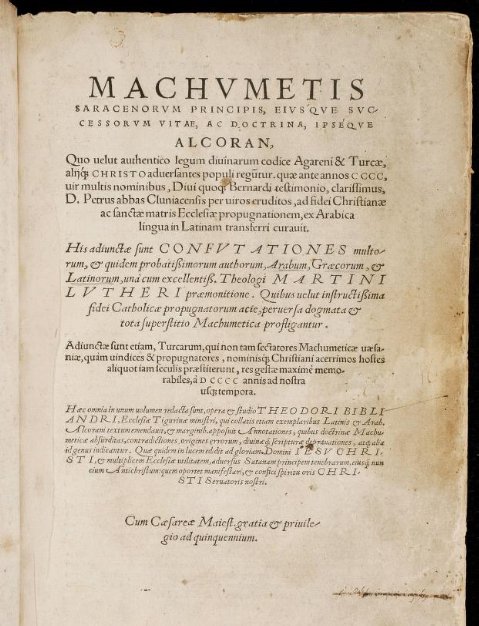
The research team


Sadig Malki from Mecca, Samuel E. Shropshire from Charleston and Torsten Michael Peschek from Kelbra, born a short distance from Luther's own birthplace. Three totally different backgrounds, three journeys of faith, and one shared conclusion about the concept of God they found in the Quran.
Read the full study
Complete with sources, footnotes and the full comparison scheme.
Available in Kindle and paperback editions.